

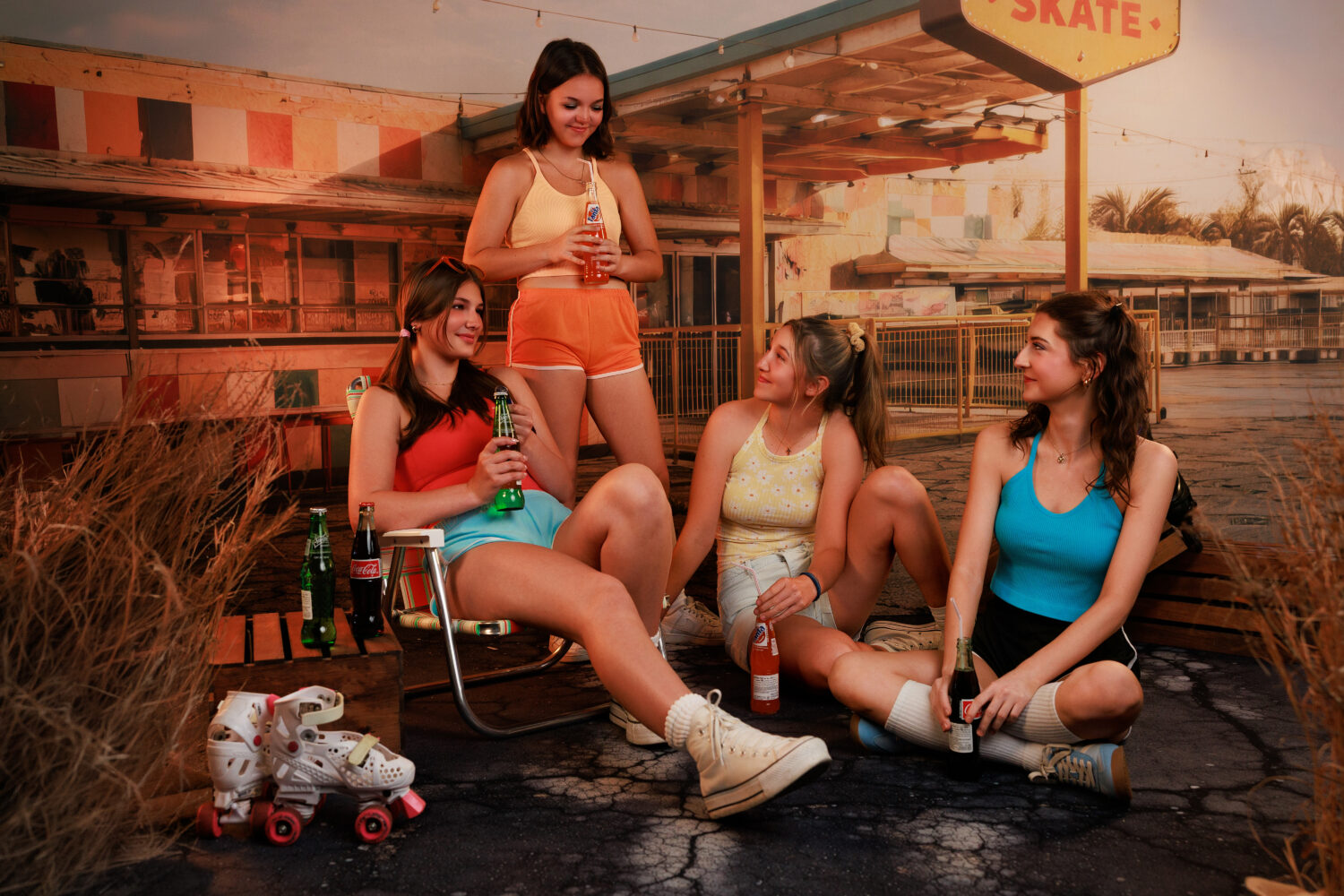
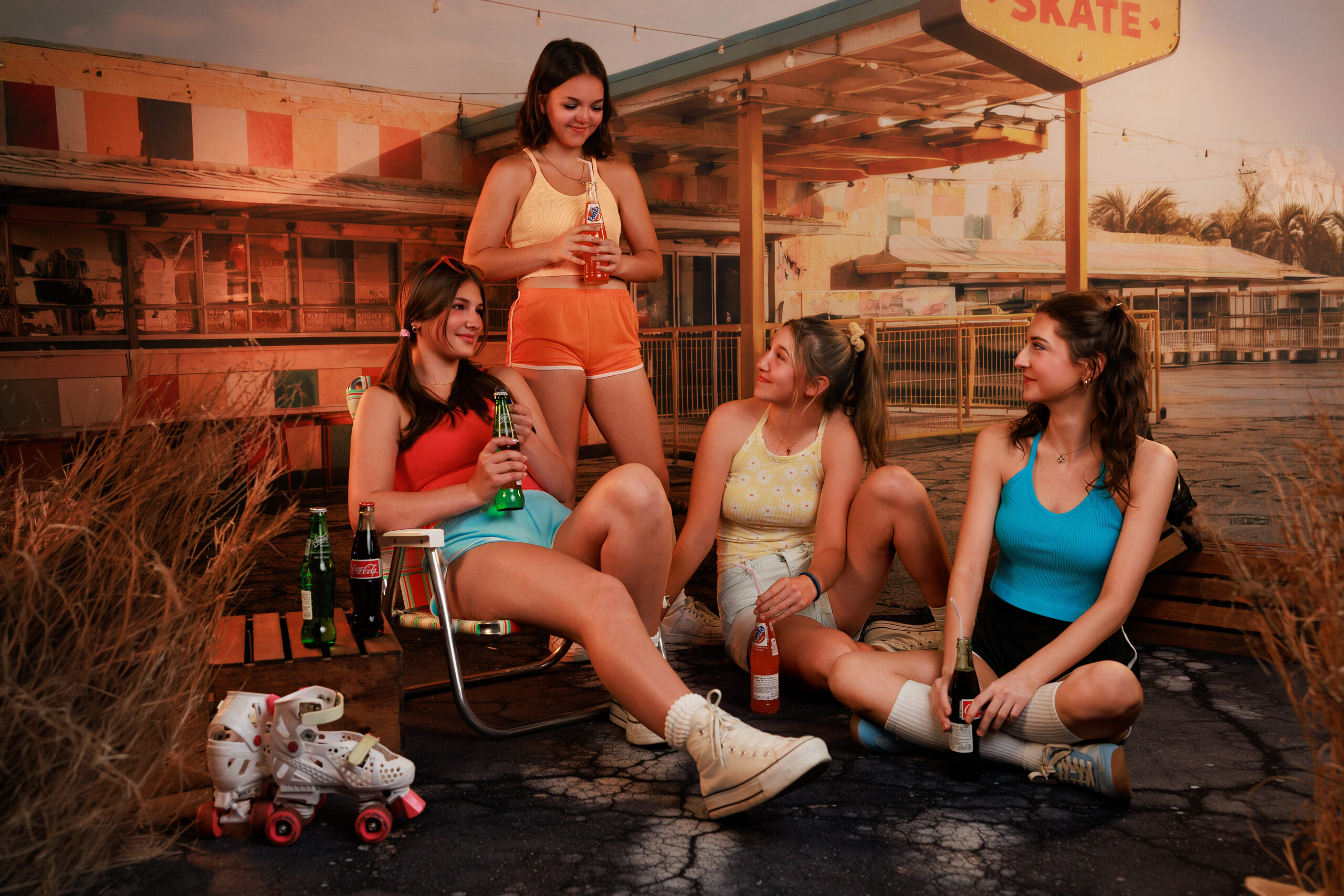
One of the biggest advantages of working in a studio is the ability to build an environment that tells a story. With the right backdrop, carefully chosen props, and intentional lighting, an ordinary studio space can become almost anywhere.
For this senior influencer team session, the goal was to recreate the nostalgic atmosphere of a vintage roller rink—complete with warm sunset lighting, retro furniture, classic props, and the feeling of spending a summer evening with friends in the parking lot after skating.
Watch the full behind-the-scenes video below to see exactly how the set came together.
Start with a Strong Foundation
Every environmental portrait begins with a believable scene.
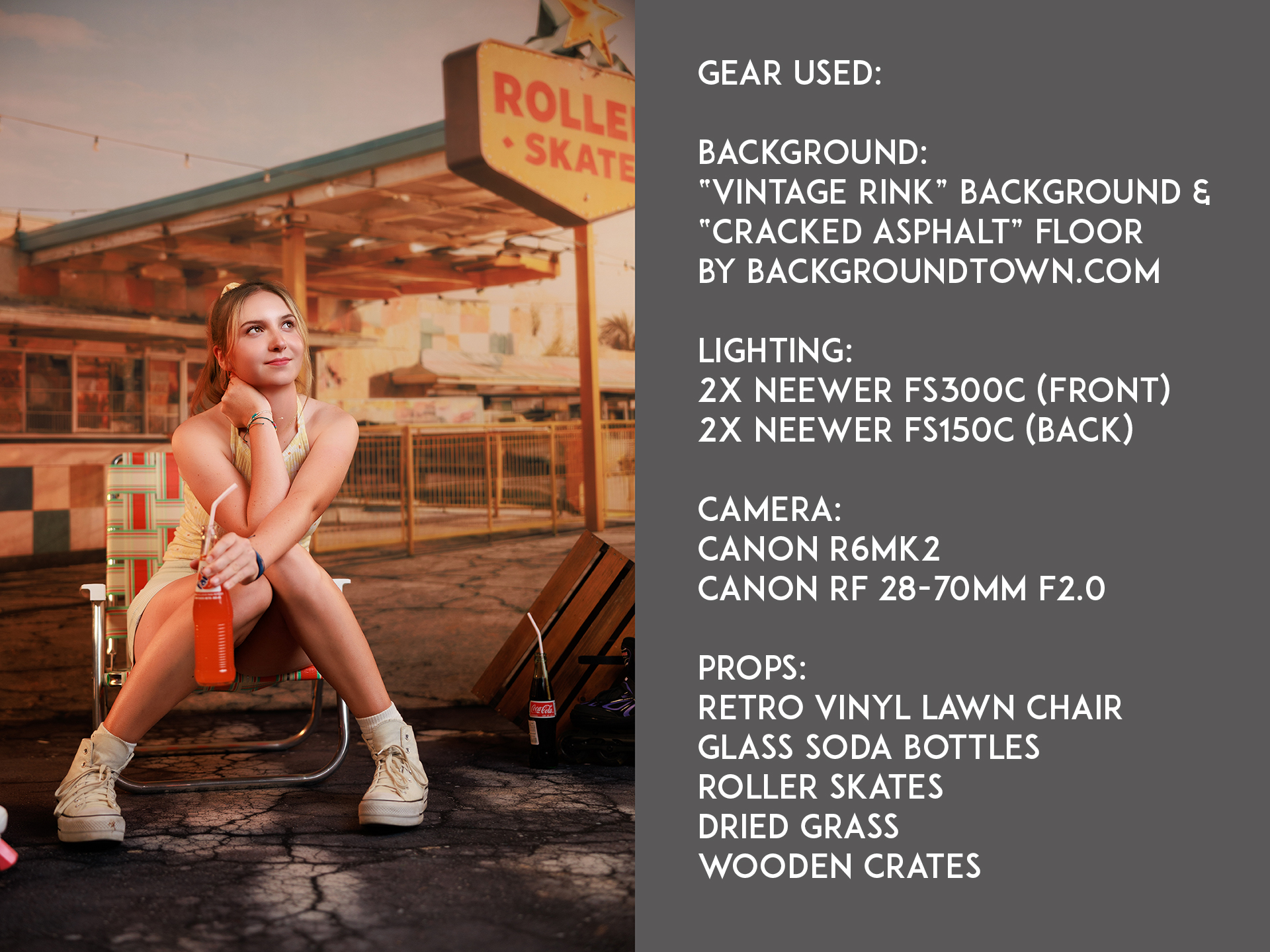
For this set, a custom “Vintage Rink” backdrop was paired with a cracked asphalt floor drop to establish the location. Instead of relying on digital composites, combining physical elements helped create depth and realism directly in camera.
Adding a few carefully selected props completed the illusion. A retro webbed lawn chair, vintage soda bottles, roller skates, and other nostalgic accessories helped establish the time period without overwhelming the composition.
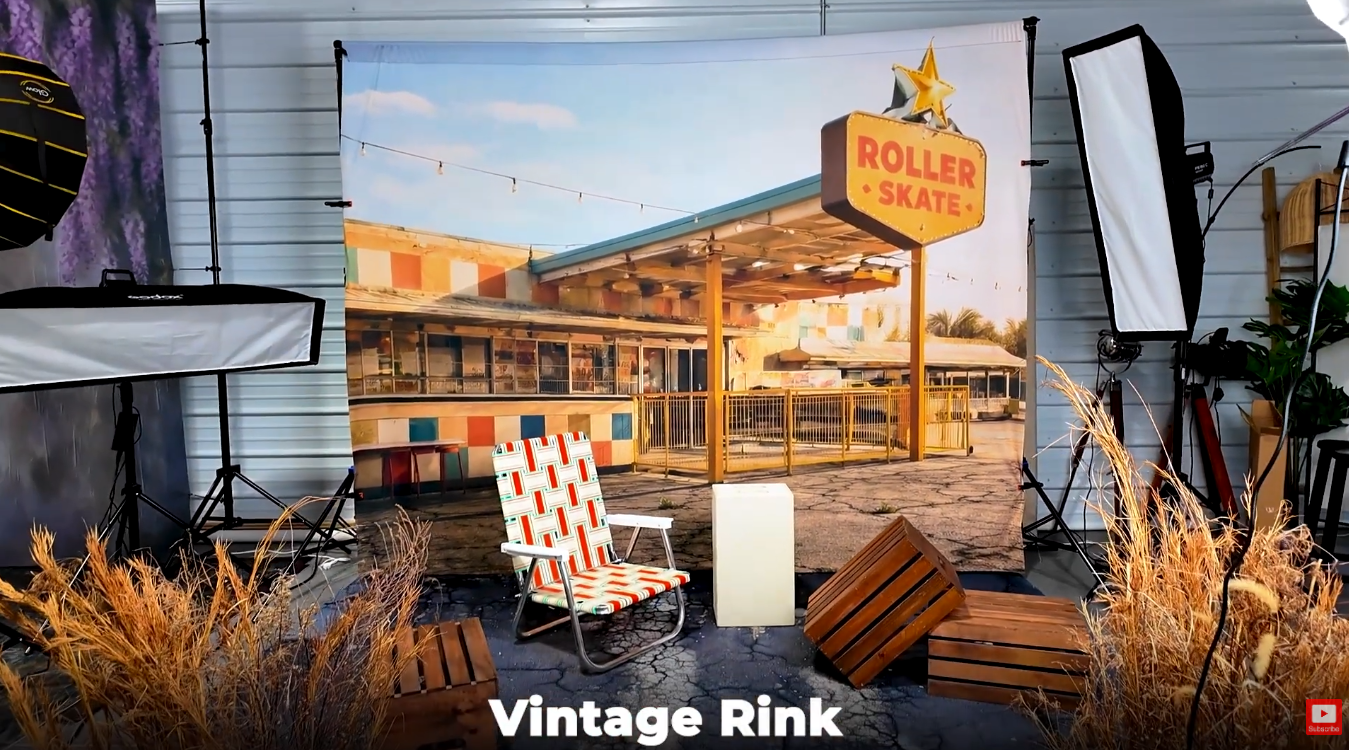
The goal isn’t to fill the scene with props—it’s to choose just enough elements that viewers immediately understand the story.
Lighting Sells the Illusion
Even the best backdrop won’t feel convincing if the lighting doesn’t match the environment.
The inspiration for this set came from the warm evening light often seen outside roller rinks during the summer. Rather than using neutral studio lighting, multiple continuous light sources were layered together to recreate that golden-hour atmosphere.
A 3200K light positioned high off to one side simulated warm sunlight entering the scene, establishing the primary direction of light.
A second, warmer light was aimed at the floor to create the orange glow often seen when sunlight reflects across asphalt.
The main key light illuminated the subjects while a subtle fill light softened shadows without eliminating the dramatic contrast created by the simulated sunset.
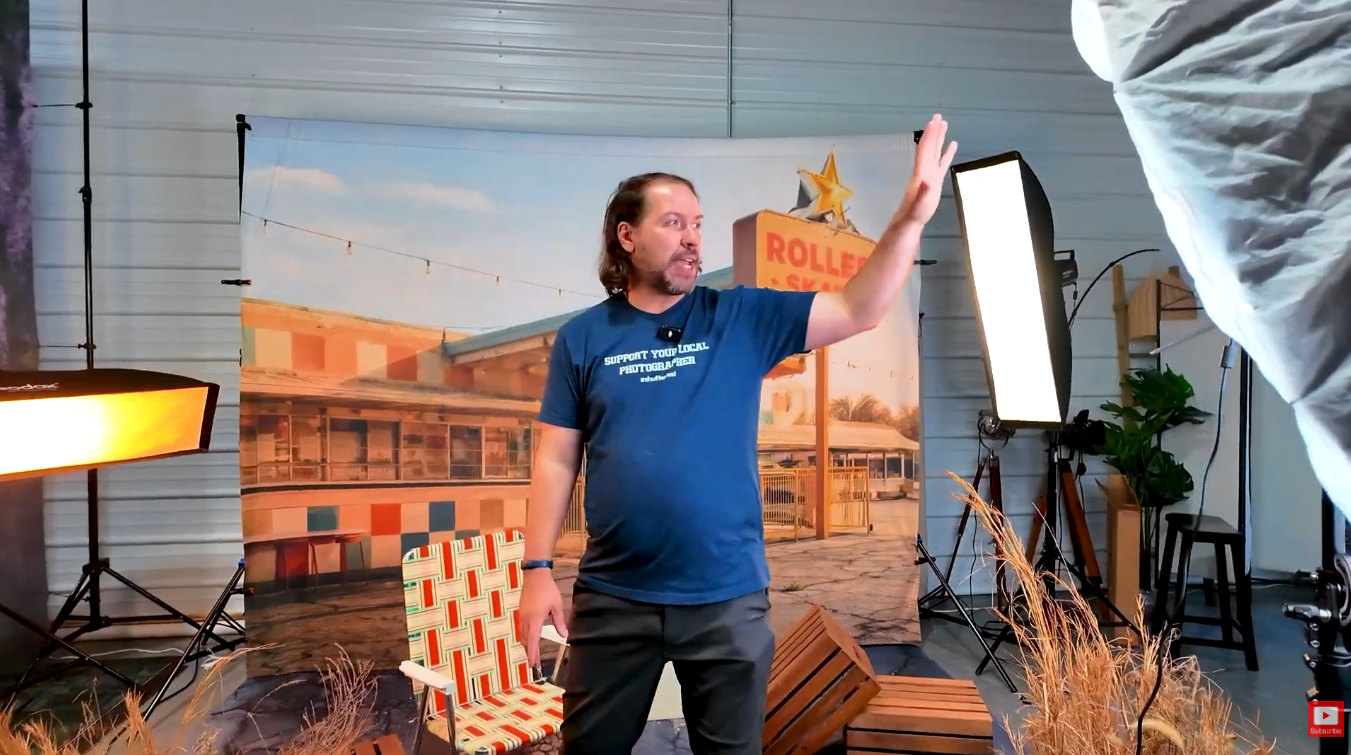
By controlling both the color temperature and the direction of each light, the finished portraits feel like they were captured outdoors rather than inside a studio.
Shoot in Kelvin Mode
One of the easiest mistakes when working with mixed lighting is allowing the camera’s Auto White Balance to constantly adjust color throughout the session.
Setting the camera to a fixed Kelvin value keeps every image consistent and preserves the intentional mix of warm and neutral tones created by the lighting setup.
Maintaining that consistency also makes post-processing faster, since every image begins with the same color balance.
Direct the Scene, Not Just the Pose
Once the environment is built, posing becomes about interaction instead of perfection.
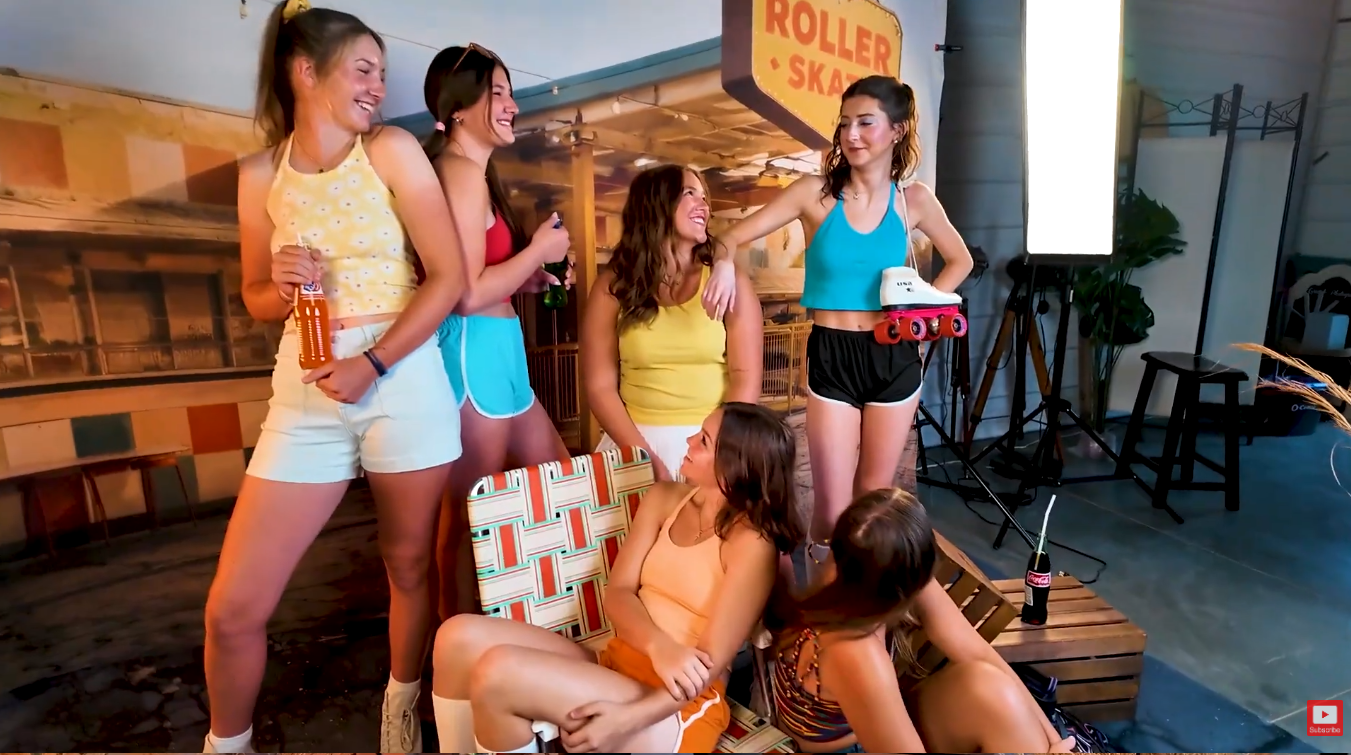
Throughout the session, the focus shifted from creating rigid poses to encouraging natural moments that felt authentic to the setting. Leaning against the chair, sharing a drink, laughing with friends, and relaxing on the pavement all reinforced the story being told.
Small adjustments to hand placement, body angles, and eye direction refined each composition while allowing every senior’s personality to come through.
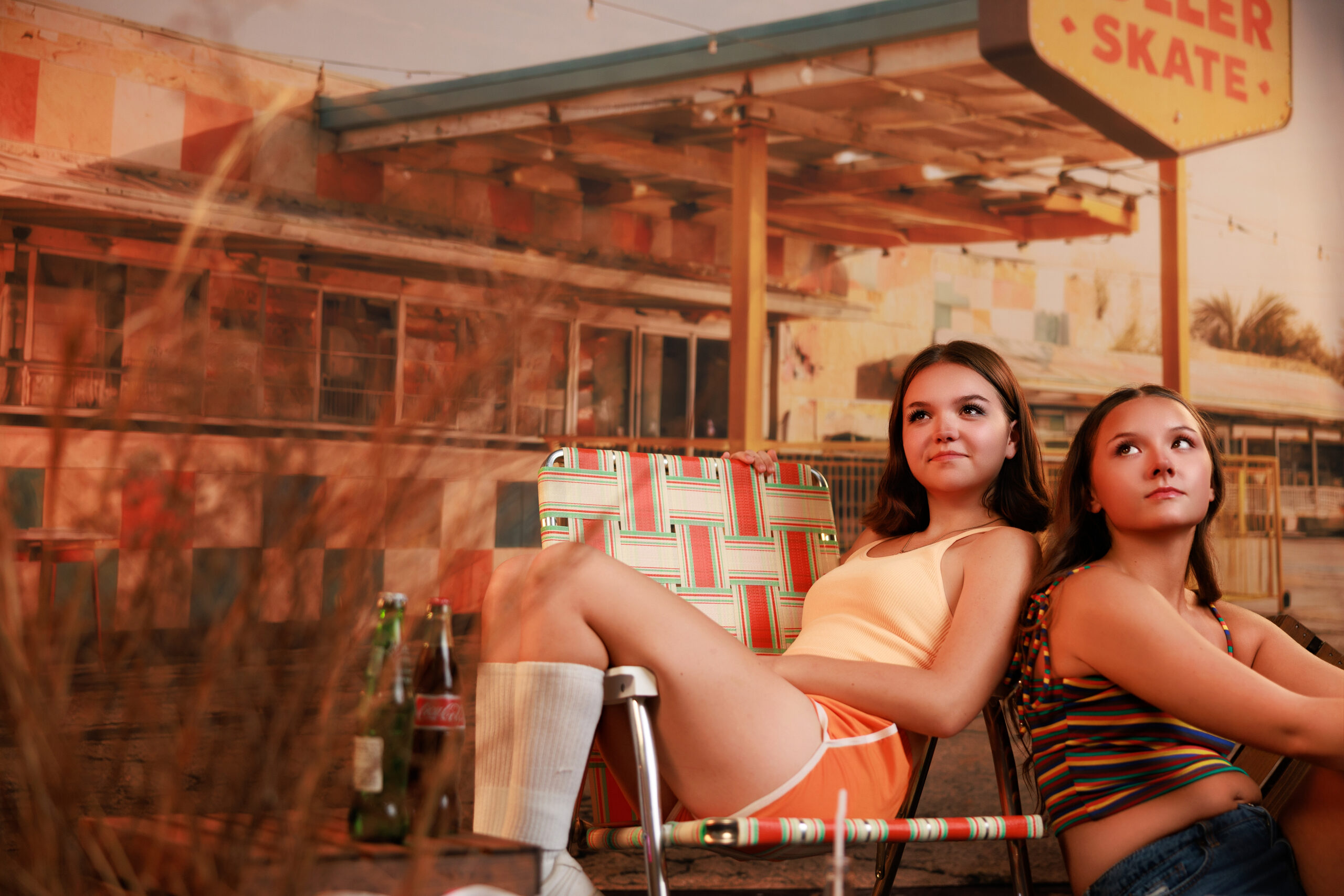
When the environment feels believable, simple interactions often create stronger photographs than overly complicated posing.
Small Details Create Big Impact
Much of what makes a themed set successful comes from paying attention to details that viewers may never consciously notice.
Warm shadows across the pavement.
Vintage furniture.
Period-inspired accessories.
Consistent color throughout the scene.
Directional lighting that matches the backdrop.
Each element supports the same visual story, allowing the final portraits to feel cohesive rather than staged.
Want to Build More Immersive Portrait Sets?
Creative portrait photography isn’t about owning the most expensive gear—it’s about combining lighting, backgrounds, and storytelling to create images that transport viewers somewhere unexpected.
Whether recreating a roller rink, a beach at sunset, or an urban street scene, the same principles apply: start with a believable environment, light it with intention, and let the story guide every creative decision.